


How to Start a Fire in the Outdoors
Fire is one of the most important elements of survival in the wild. It provides warmth, light, the ability to cook, and psychological comfort. In emergency situations, starting a fire can be a matter of comfort or survival. In this article, we’ll look at various methods for starting a fire, recommended equipment, and also where you need to be careful about fire bans and possible fines. Starting a fire isn’t just about having a lighter in your pocket. In the wilderness, you can rely on various techniques. Some are quick and simple, but they may not always work. Others require practice and patience. Let’s go over them in more detail.

FIRE STARTERS: THE KEY TO SUCCESS
Without a good fire starter, even the best spark is useless. In the great outdoors, natural materials such as dry grass, birch bark, or finely scraped wood are most commonly used. For greater reliability, however, we recommend bringing artificial fire starters as well—such as wax-soaked cotton, flammable tablets, or fire-starting sticks. These materials burn longer and more intensely, which significantly increases your chances of successfully starting a fire even in damp or windy conditions..
A FIRE STATER IS A RELIABLE BASIC ITEM IN ANY GEAR SET
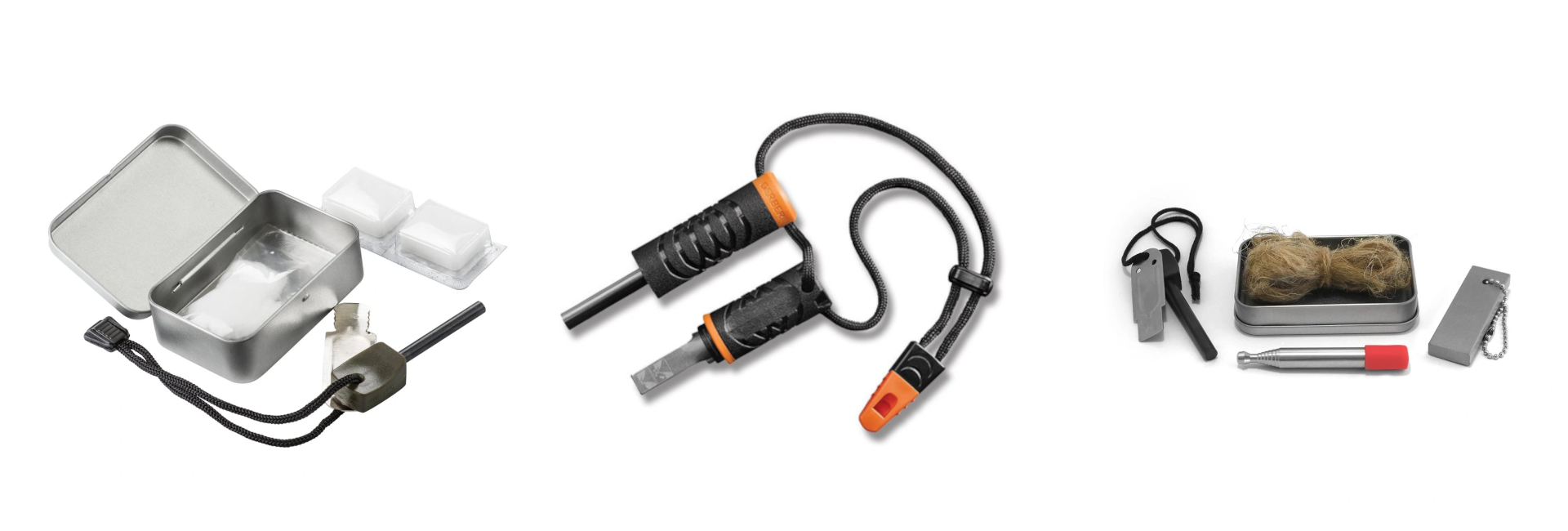
A fire starter is one of the most reliable ways to start a fire. The advantages of fire starters include their long service life, the ability to reuse them, and their effectiveness even under adverse conditions, such as wind, rain, or freezing temperatures. And how does a fire starter work? Simply strike a ferrocerium rod, and a spark with a temperature of over 3,000 °C is produced. If you have dry tinder, birch bark, wax-soaked cotton, or another suitable fire starter on hand, starting a fire is a matter of moments.
Fire starters come in various sizes, including models with a built-in whistle or compass, making them an excellent addition to a compact survival kit.
WATERPROOF MATCHES
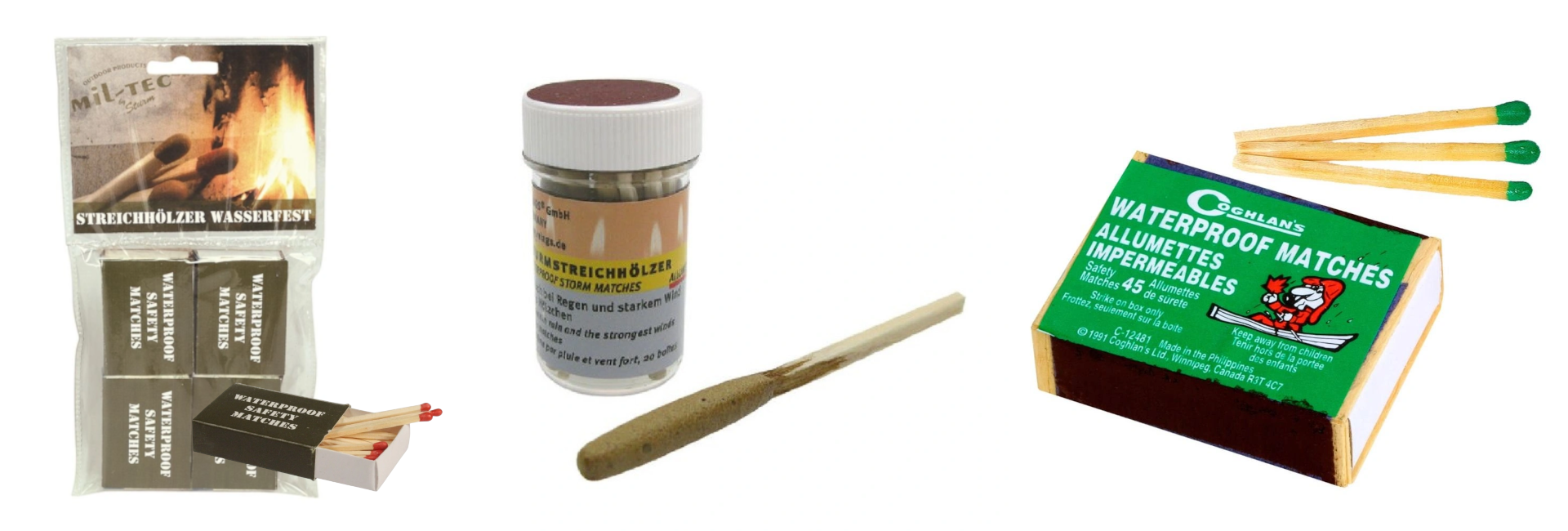
Matches are a traditional tool for starting a fire, but not all types are suitable for outdoor use. Classic matches get wet easily and often fail in the wind. Therefore, a better solution is special military matches, non-blowout matches and waterproof matches that burn even in heavy rain or wind and can be lit without a lighter. They are available either in classic boxes or in waterproof packaging that protects them from moisture.
FRICTION: A TRADITIONAL BUT DEMANDING METHOD
Starting a fire by friction is a technique familiar from survival documentaries. Either a hand drill or a bow drill is used. The principle is simple—heat is generated by rubbing wood against wood. The heat is transferred to a tinder nest and fanned into a flame. In practice, however, this is very challenging. This technique requires dry wood, proper technique, and a lot of patience. We recommend it more as a skill to practice than as your primary method of starting a fire.
LIGHTERS: A QUICK BUT NOT ALWAYS RELIABLE SOLUTION
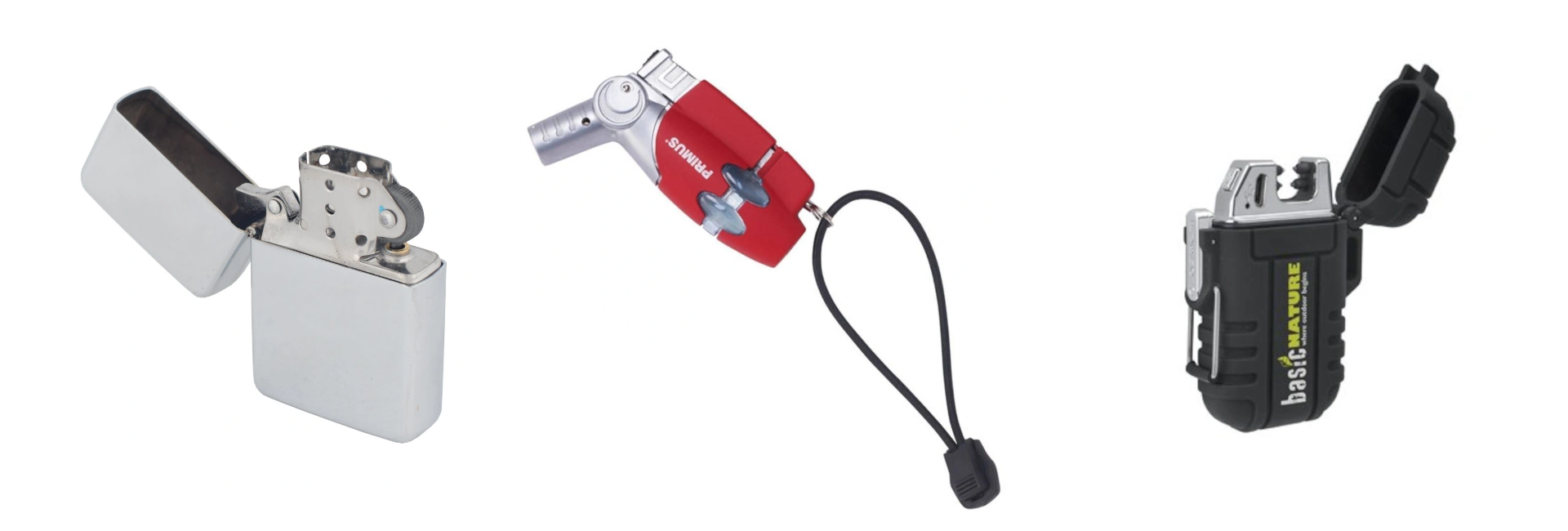
Lighters are a common piece of gear, but they can fail when you're out in nature, especially if they get wet or run out of gas. That's why it's worth investing in more durable models. Tactical lighters with piezoelectric ignition or plasma lighters work even in wind and rain. Combined with a fire starter, they provide a quick and effective solution.
SUNLIGHT: AN ECO-FRIENDLY BUT UNRELIABLE METHOD
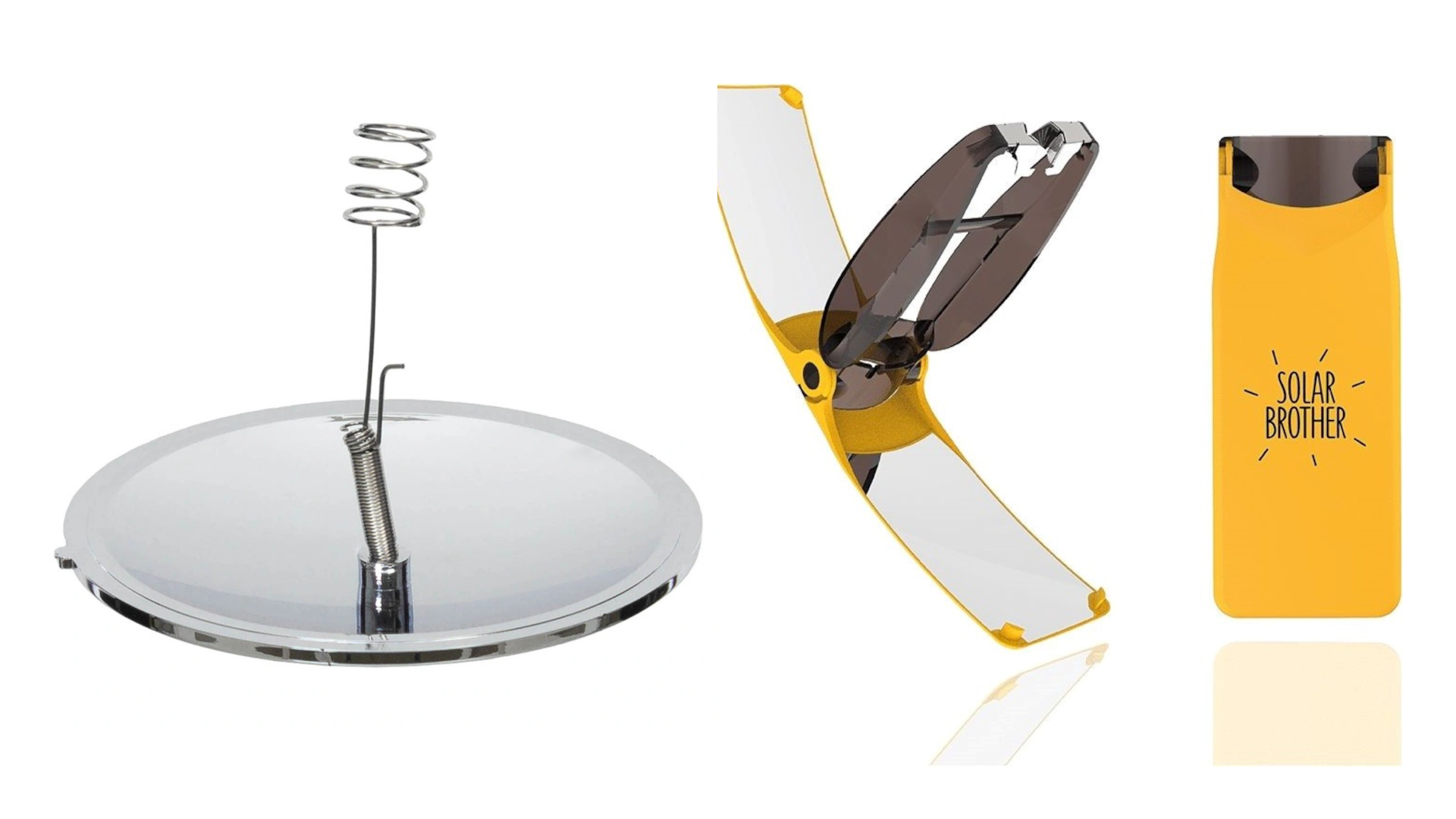
On a sunny day, you can also start a fire using a magnifying glass, lens, or emergency solar lighter. Just focus the beam on the lighter and wait a while. This method is quiet, environmentally friendly, and effective, but highly dependent on the weather. It is more suitable as a supplement or backup alternative.
LEGAL RESTRICTIONS: WHERE AND WHEN YOU SHOULD NOT BUILD A FIRE
Building a campfire is not just about skills and equipment—it also means following local regulations. Fire laws vary between countries, regions, and protected areas, so always check the local rules before lighting a fire.
FORESTS AND PROTECTED AREAS
In many countries, open fires are only permitted in designated fire pits or campsites. During periods of drought or high wildfire risk, temporary fire bans may also apply to portable stoves, grills, and other sources of open flame. National parks and nature reserves often have additional restrictions, so it's important to check the regulations before your visit.
STAY SAFE AND RESPONSIBLE
Even where campfires are allowed, never leave them unattended and always extinguish them completely before leaving. If you're unsure whether an open fire is permitted, use a camping stove instead. Taking a few minutes to check local regulations can help protect nature and prevent costly mistakes.

